
I was listening to a podcast recently, an interview with one of the founders of Hotspotting, the property research firm, and he made a point that stayed with me. Australia isn’t one property market, it’s thousands of individual markets, and they rarely move in unison.
His example was a telling one. Last year, the single strongest capital gain in the country didn’t come from Sydney, Melbourne or the Gold Coast. It came from a unit market in a suburb of Toowoomba. That’s worth considering, because it runs counter to the way the property market is often reported.
When you read that “Australian property is falling,” what you’re really seeing is a national average drawn from thousands of very different markets, some rising, some flat, and some genuinely declining. The average may be useful as a broad indicator, but it rarely tells you what is happening in a specific suburb, property type or price bracket. And right now, the divergence between markets is particularly clear.
Over the past year, Australia’s two largest capitals have softened noticeably, with Melbourne and Sydney both down around 6%, according to Cotality. Yet over the same period, markets such as Perth, Brisbane and Adelaide have continued to record solid gains.
Same country, same interest-rate environment, same federal policy settings, very different outcomes.
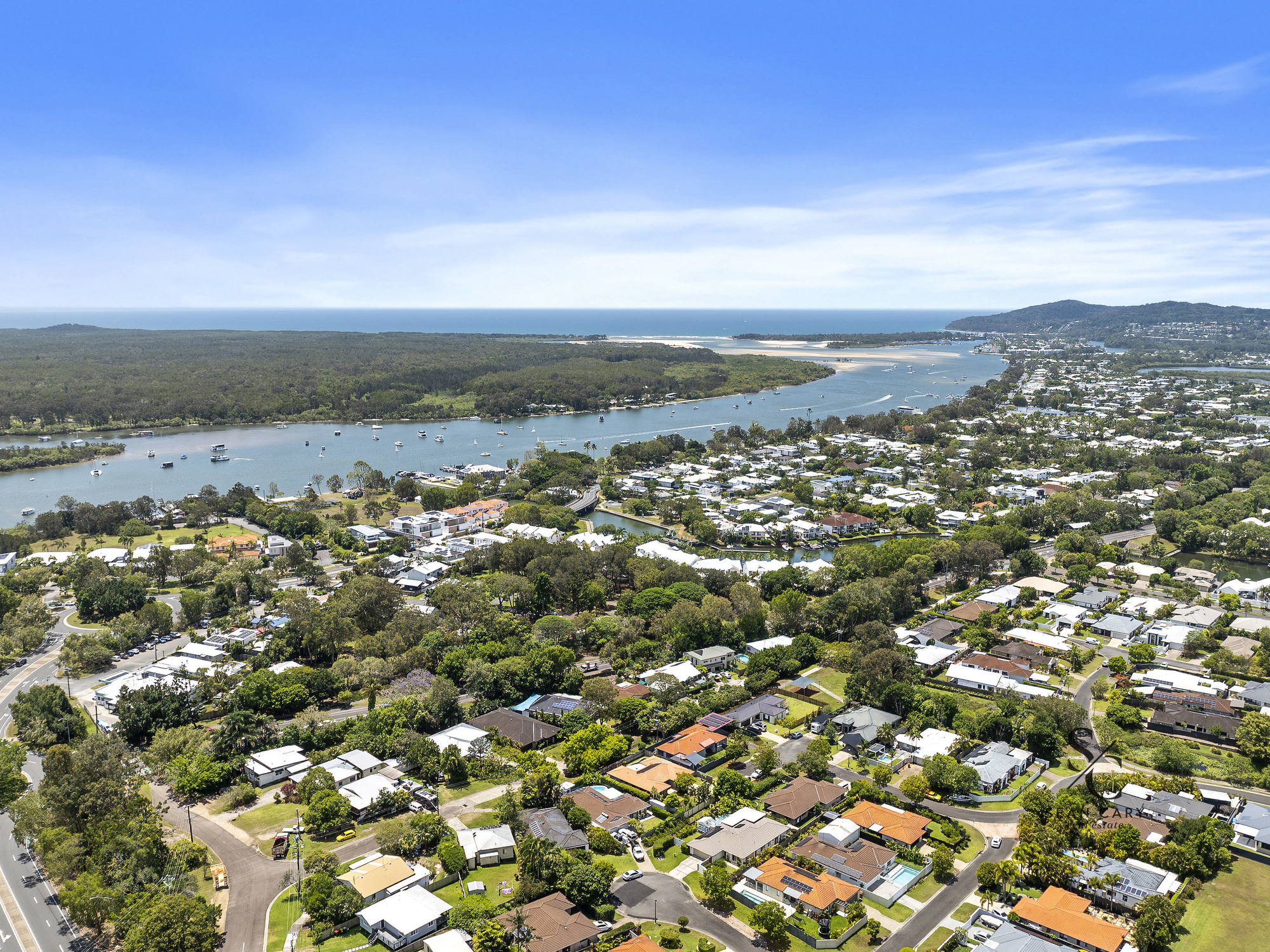
So where does Noosa sit? Broadly speaking, it remains stable.
While some of the major capitals have moved backwards, Noosa’s median house price has held relatively steady, easing marginally from $2,305,000 to $2,268,000 year on year. In practical terms, values today are not materially different from where they were a year ago.
That is significant. It points to a market holding its ground at a time when other parts of the country have been giving some of theirs back. That doesn’t mean Noosa is immune to broader economic conditions. No property market exists in isolation, and changes in interest rates, confidence, credit conditions and the wider economy inevitably have an influence. But steady values against a backdrop of softer capital-city markets do point to a level of underlying resilience.
Where we have seen a clearer shift is in transaction volumes rather than prices. In July and August last year, 12 and 7 houses sold in Noosa Heads respectively, this year, May and June recorded 8 and 2 sales (according to Cotality). Activity has slowed, but importantly, the properties that are selling are still achieving prices broadly comparable with those seen a year ago.
That combination tells its own story. This is not a market characterised by widespread seller capitulation or rapidly falling values. It is a more measured environment — fewer buyers and sellers meeting, more considered decision-making, and in some cases longer selling campaigns.
Yet values continue to be supported by the fundamentals that have always distinguished Noosa: limited supply, tightly constrained new development, and enduring demand from people who want to live here, holiday here and hold property here for the long term.
The broader lesson from that Toowoomba unit market is the one worth remembering: national headlines are a poor guide to any individual property market, and an even poorer guide to the value of an individual home.
What matters is what is happening in your market, within your segment, and, in many cases, on your street.
For Noosa property owners, that makes local evidence more important than ever. In a market where conditions can vary significantly between suburbs, price points and property types, informed decisions come from understanding the sales happening closest to home. National commentary may set the backdrop, but it is local data, and the detail behind each sale. That provides the clearest picture of where your property truly sits.
You might also be interested in

Aug 25, 2026
The 2026 Federal Budget introduced the most significant changes to the taxation of investment property in nearly 30 years. Understandably, the changes to negative gearing and capital gains tax have ge
Aug 17, 2026
Most property markets are difficult to read — too many variables, too much noise. But occasionally you find a controlled sample that cuts through it, and here in Noosa we have a good one. Elysium Noos